




PES 원료는 고성능 엔지니어링 열가소성 수지인 폴리에테르설폰(PES)의 기본 형태를 의미하며, PES는 탁월한 내열성, 화학적 안정성 및 기계적 강도로 잘 알려져 있습니다. PES 소재는 의료, 여과, 전자 및 항공우주 분야를 포함하여 내구성과 고온 성능이 중요한 산업 분야에서 널리 사용됩니다.
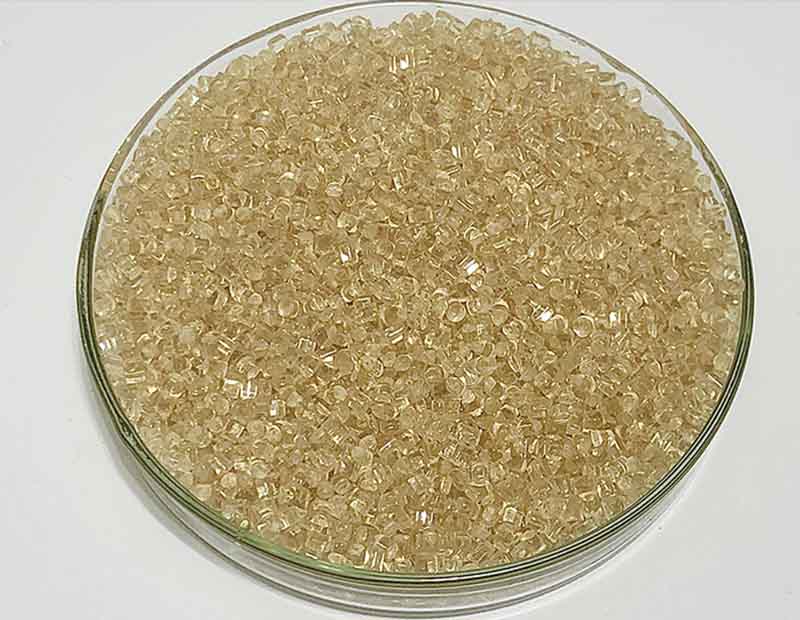
1. PES 자료 개요
PES 소재는 설폰계에 속하는 비정질 고분자로, PSU 및 PPSU와 유사하지만 내열성이 더 높습니다. PES는 일반적으로 투명하거나 옅은 호박색을 띠며, 뛰어난 치수 안정성과 가수분해 저항성을 제공합니다.
PES 원료의 주요 특징:
고온 연속 작동 가능 - 최대 180°C.
산, 알칼리 및 세제에 대한 화학적 내성이 뛰어납니다.
탁월한 가수분해 안정성 – 반복적인 증기 멸균에 적합합니다.
습도가 높은 환경에서도 뛰어난 치수 안정성을 유지합니다.
일반적인 PES 소재 응용 분야에는 정수 필터용 멤브레인, 의료 기기 하우징, 항공 우주 부품 및 식품 가공 장비가 포함됩니다.
2. PES 원료의 물리적 및 화학적 특성
PES 원료의 특성은 높은 열 성능과 견고한 기계적 및 전기적 특성을 결합합니다.
| property | typical value |
|---|---|
| 유리 전이 온도(tg) | 약 225°C |
| 연속 서비스 온도 | 180°C |
| 인장 강도 | 90~100 MPa |
| 수분 흡수율(24시간) | <0.4%<> |
| chemical resistance | excellent against acids/alkalis |
chemical resistance of pes materials makes them ideal for filtration and medical environments where aggressive cleaning agents are used. pes resists hydrolysis, ensuring long-term stability in hot water and steam.
3. pes raw materials manufacturing process
the pes manufacturing process involves several steps to ensure purity and performance:
polymerization reaction – pes is synthesized via condensation polymerization of bisphenol s (bps) and dichlorodiphenyl sulfone under alkaline conditions.
purification – removing residual solvents and unreacted monomers.
pelletizing – converting into uniform granules for processing.
quality testing – verifying thermal, mechanical, and chemical resistance properties.
processing pes materials typically includes injection molding, extrusion, and thermoforming. as with other sulfone polymers, pre-drying before processing is crucial to prevent defects caused by moisture.
4. pes vs psu vs ppsu: high-performance plastics comparison
| property | pes | psu | ppsu |
|---|---|---|---|
| max continuous use temp | 180°C | 170°c | 180°C |
| transparency | transparent/amber | transparent/amber | transparent/amber |
| impact resistance | good | good | excellent |
| chemical resistance | excellent | good | excellent |
| cost | higher than psu | moderate | higher than psu |
pes vs psu: pes has a higher glass transition temperature and better thermal stability than psu.
pes vs ppsu: ppsu offers better impact strength, but pes provides superior dimensional stability at high temperatures.
for engineers comparing pes vs psu vs ppsu, pes is often chosen when thermal stability and chemical resistance are top priorities.
5. sustainability and pes plastic recycling
with growing environmental awareness, pes raw materials are being evaluated for sustainability and recyclability:
durable performance reduces waste by extending product life.
pes plastic recycling process allows for reprocessing clean, uncontaminated scrap.
chemical recycling research aims to recover monomers from pes waste for reuse in new materials.
manufacturers are also adopting greener pes manufacturing processes by minimizing solvent usage and improving energy efficiency.
pes raw materials are a versatile and reliable choice for industries requiring heat resistance, chemical durability, and long-term performance. whether used in filtration membranes, medical devices, or aerospace components, pes materials deliver exceptional results. with advancements in recycling and sustainable production, pes is positioned to remain a leading high-performance plastic for the future.
